
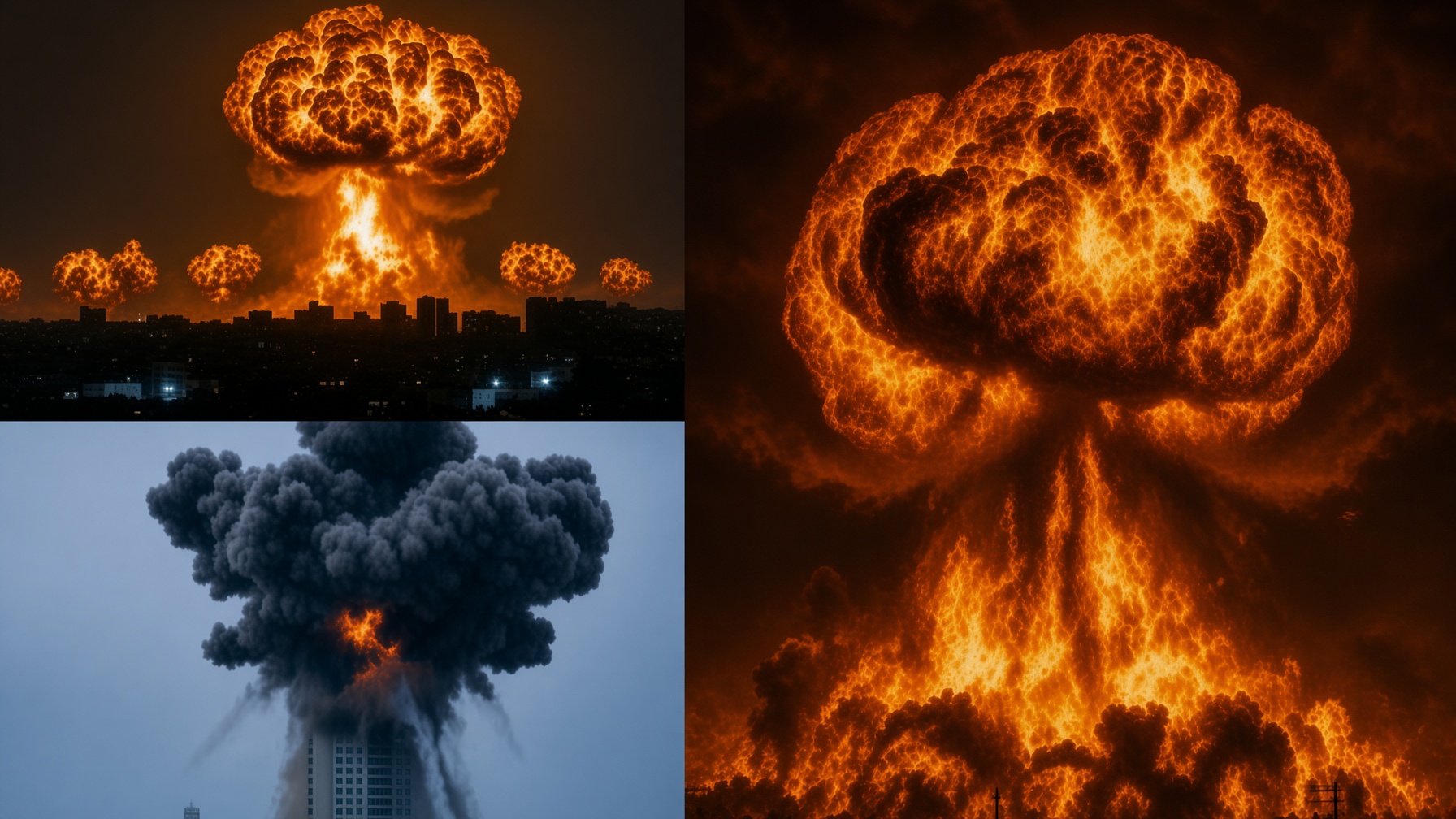
Massive explosions struck major cities across the Middle East on March 8-9, 2026, as strikes and counterstrikes intensified between Iran and Israeli and U.S. forces.
The blasts illuminated skies over Tehran, Beirut, and other regional cities as emergency sirens activated across affected areas. The escalation marks a continuation of military operations now in their second week, with both sides launching coordinated attacks on infrastructure and military targets.
What Happened
Tehran experienced some of the heaviest impacts, with Israeli airstrikes targeting fuel depots and storage facilities south and west of the capital. Thick black smoke blanketed the city of 10 million residents, with eyewitnesses describing scenes of widespread destruction and fires burning for hours.
Iran responded with fresh missile barrages directed at Israeli cities and regional targets. Air defense systems intercepted most incoming fire, though some strikes caused injuries and property damage near Tel Aviv and in other populated areas.
The Qatar capital of Doha, along with Bahrain, Kuwait, Saudi Arabia, and the United Arab Emirates, also faced incoming threats as the conflict spread across the region. Residents received emergency alerts to seek shelter as air defenses activated multiple times.
Regional Impact
Military officials attributed the strikes to weakening Iran’s missile production and energy infrastructure capabilities. The coordination and scale of simultaneous attacks across multiple countries triggered widespread alarm among civilians and governments monitoring the situation.
Hezbollah in Lebanon launched attacks that drew Israeli counterstrikes on southern Beirut suburbs, forcing evacuation warnings in affected areas. The expanding scope of military operations raised concerns among diplomatic channels and international observers.
Global Consequences
Oil markets reacted sharply to the escalating violence, with Brent crude briefly approaching $120 per barrel before settling lower. Supply concerns and geopolitical uncertainty drove volatility across energy and financial markets worldwide.
International leaders continued quiet diplomatic efforts to prevent further escalation while military operations persisted. Government emergency centers coordinated response efforts as military analysts warned that miscalculation could broaden the conflict further.
Verified news sources including Reuters, BBC, and Al Jazeera provided documented updates on the developing situation. Social media circulated unconfirmed footage that often contained inaccurate information about casualty counts and strike locations.
This story has been updated. CNN’s international correspondents contributed to this report.